













AI & Robotics Under the Spotlight: China’s Humanoid Robot Boom Faces Global Scrutiny
China’s rapid growth in humanoid robots is drawing global scrutiny as experts debate safety, ethics, jobs, and the future of AI-powered machines.

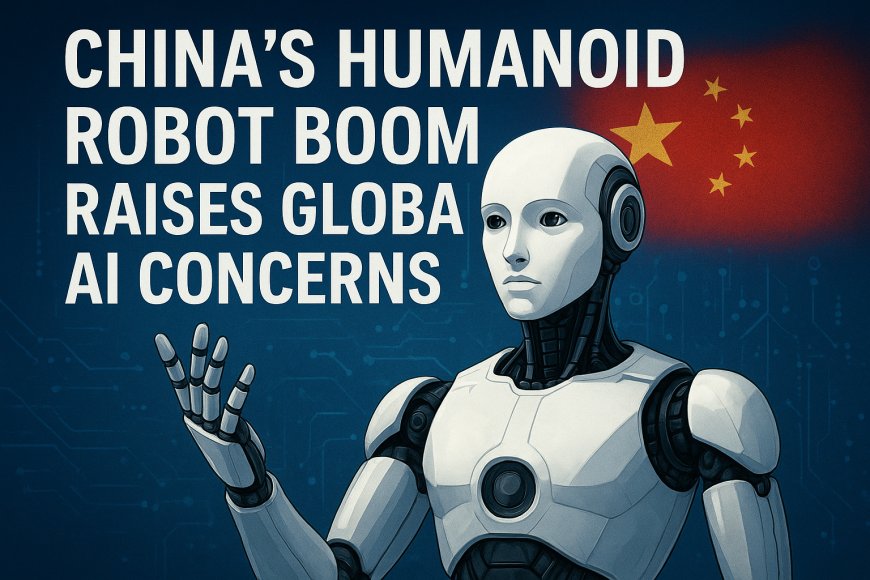
Over the past few years, China has rapidly positioned itself as a global powerhouse in robotics and artificial intelligence. From factory automation to futuristic service machines, the country has invested heavily in developing intelligent systems that can think, move, and even communicate like humans. Among all these advancements, one particular area has attracted intense attention: humanoid robots.
Humanoid robots — machines designed to resemble and behave like human beings — have become a major focus for Chinese tech companies and investors. These robots are built to walk, talk, recognize faces, perform physical tasks, and even express basic emotions. While this innovation showcases impressive engineering, it has also drawn global and domestic scrutiny over safety, sustainability, and long-term impact.
Why China Is Investing So Heavily in Humanoid Robots
China is facing a shrinking workforce and an aging population. To maintain productivity and economic growth, the country is turning to automation to fill the gap. Humanoid robots are seen as the next evolution of automation — capable of performing tasks traditionally done by humans in industries like:
-
Manufacturing and assembly
-
Healthcare and elderly assistance
-
Customer service and hospitality
-
Security and surveillance
-
Education and entertainment
These robots are designed not only to work but to interact, which makes them suitable for roles that require communication and movement, not just repetitive factory work.
What Has Triggered the Scrutiny
With more than a hundred companies rushing into the humanoid robotics space, questions are now being raised about whether this boom is driven by real demand or speculative hype. Governments, analysts, and investors are asking important questions:
-
Are these robots truly ready for real-world use?
-
Is there a risk of overvaluation and investment bubbles?
-
What happens to human jobs if robots replace them?
-
How secure and controllable are these intelligent machines?
The concern is not just economic — it is also social and ethical. Robots that look and act like humans can influence behavior, privacy, employment patterns, and even personal relationships.
The AI Factor: Brains Behind the Body
What makes these humanoid robots powerful is not just hardware, but artificial intelligence. Modern robots are connected to advanced AI systems that help them:
-
Understand speech and respond naturally
-
Learn from their environment
-
Recognize people and emotions
-
Adapt to new tasks over time
While this intelligence is impressive, it also raises fears about control and accountability. If a robot makes a decision that harms someone, who is responsible — the machine, the developer, or the company?
A Global Ripple Effect
China’s progress has forced other countries to speed up their own robotics and AI development. The global race for intelligent machines is now faster than ever. Countries are realizing that whoever leads in robotics and AI could dominate future industries such as defense, healthcare, space research, and infrastructure.
At the same time, international organizations are beginning to discuss the need for rules, limitations, and ethical guidelines for humanoid robots.
The Road Ahead: Opportunity or Overload?
China’s humanoid robot revolution has the potential to transform daily life and redefine how humans work with machines. But without the right balance of regulation, transparency, and ethical oversight, this rapid growth could lead to disruption and uncertainty.