












Huawei Unveils Collaborative “Campus Autonomous Network” White Paper: A New Era of Intelligent Campuses
Huawei, NIDA, and King Saud University unveil a new Campus Autonomous Network white paper, showcasing AI-driven automation, security, and smart campus innovation.

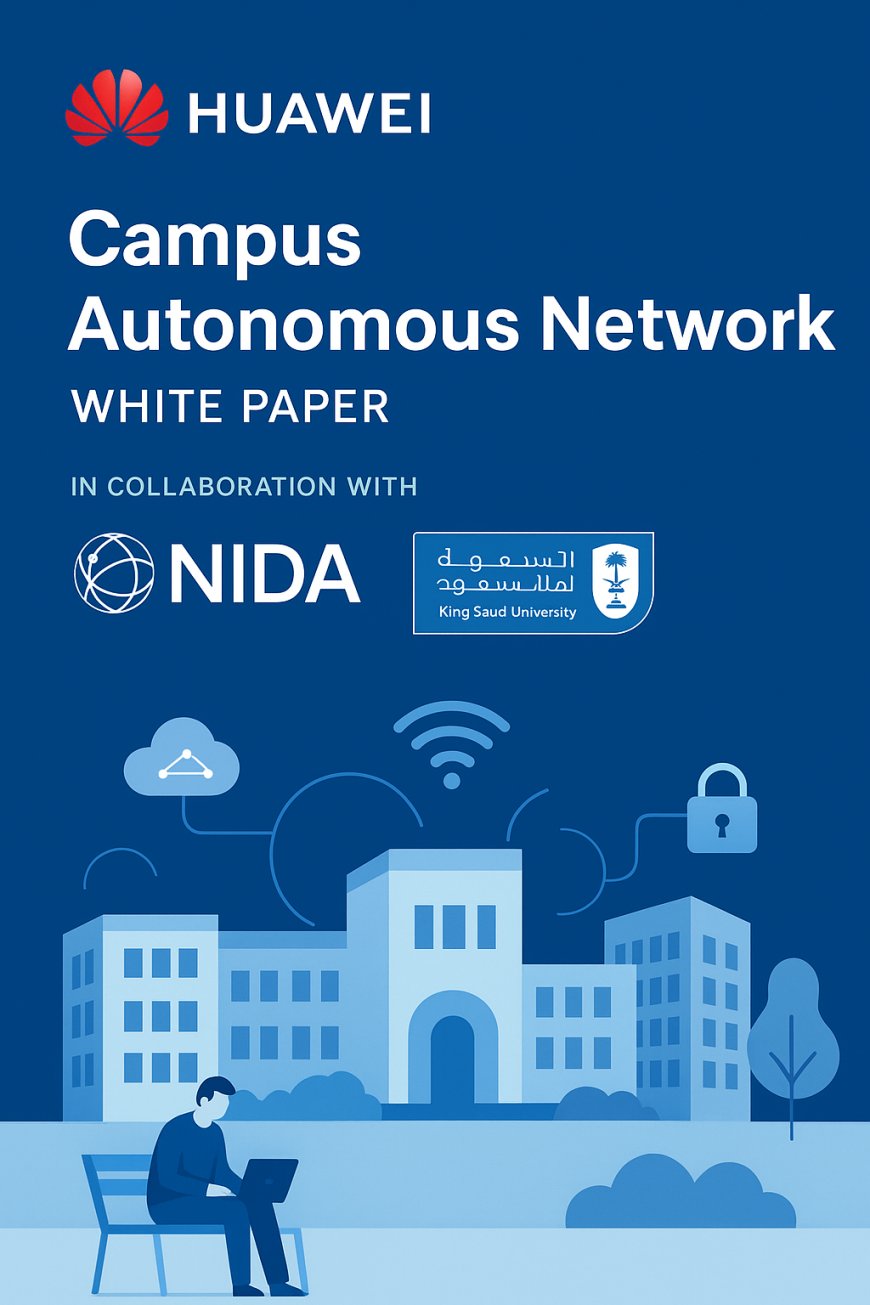
In a significant step toward the future of intelligent digital infrastructure, Huawei, along with the Network Innovation and Development Alliance (NIDA) and King Saud University, has jointly released an in-depth Campus Autonomous Network White Paper. This collaboration marks an important milestone in the evolution of smart campuses, accelerating global adoption of autonomous networking technologies designed for education, enterprises, and research institutions.
???? What Is a Campus Autonomous Network?
A Campus Autonomous Network (CAN) is a next-generation digital network framework that uses AI, automation, secure architecture, and real-time analytics to create a self-managing campus environment.
It can learn, optimize, predict issues, and fix problems automatically — with minimal human intervention.
In simple terms:
???? Faster connectivity
???? Fewer outages
???? Stronger security
???? Fully optimized performance for students, staff & visitors
???? The Power of the Collaboration
The partnership between Huawei, NIDA, and King Saud University brings together:
-
Industry-leading technology expertise
-
Academic research capability
-
Real-world deployment experience
This ensures not only strong theoretical development but also practical, scalable implementation for universities, corporate campuses, and government institutions.
???? Key Highlights of the White Paper
1. Intelligent Automation for Network Operations
The system uses AI-driven engines to automate tasks like configuration, monitoring, troubleshooting, and optimization, reducing manual workloads and lowering operational costs.
2. End-to-End Security Architecture
The white paper emphasizes adaptive security models that detect unknown threats, isolate suspicious activity, and maintain data privacy across the campus ecosystem.
3. High-Performance Connectivity
With digital transformation accelerating, campuses require multi-gigabit, low-latency connectivity. The proposed architecture provides seamless coverage for classrooms, hostels, labs, offices, and auditoriums.
4. Predictive Maintenance & Analytics
The network can identify issues before they occur using real-time telemetry and AI predictions — drastically improving uptime and user satisfaction.
5. Unified Digital Management Platform
A centralized dashboard simplifies how administrators observe, control, and optimize the entire campus network.
???? Why This Matters for the Future
Smart campuses are no longer just a dream — they’re becoming a necessity. Education institutions, enterprises, and research hubs require secure, high-capacity, and self-optimizing networks to support:
-
5G & IoT devices
-
Remote learning and hybrid classrooms
-
Cloud-driven applications
-
Smart security solutions
-
Digital ID systems
-
AR/VR-based training environments
This white paper sets the foundation for global standards that will guide the next decade of campus digitization.
???? Impact on Universities & Enterprises
For universities, it means smarter classrooms, better surveillance, high-speed Wi-Fi everywhere, and streamlined management.
For businesses, it ensures reliable operations, better security, and AI-powered efficiency — reducing downtime and IT costs significantly.
???? Conclusion: A Step Toward Autonomous Digital Ecosystems
Huawei’s joint white paper reflects a shared vision for building autonomous, intelligent, and secure campuses. With AI-driven networks becoming the backbone of digital transformation, this initiative is a strong indicator of where global networking is headed.