
AI Robotics Take Center Stage: The Rise of Autonomous and Tangible Intelligence
AI robots and autonomous systems take center stage as tangible AI moves from labs to real-world use cases across industries and daily life.
 vishalyadav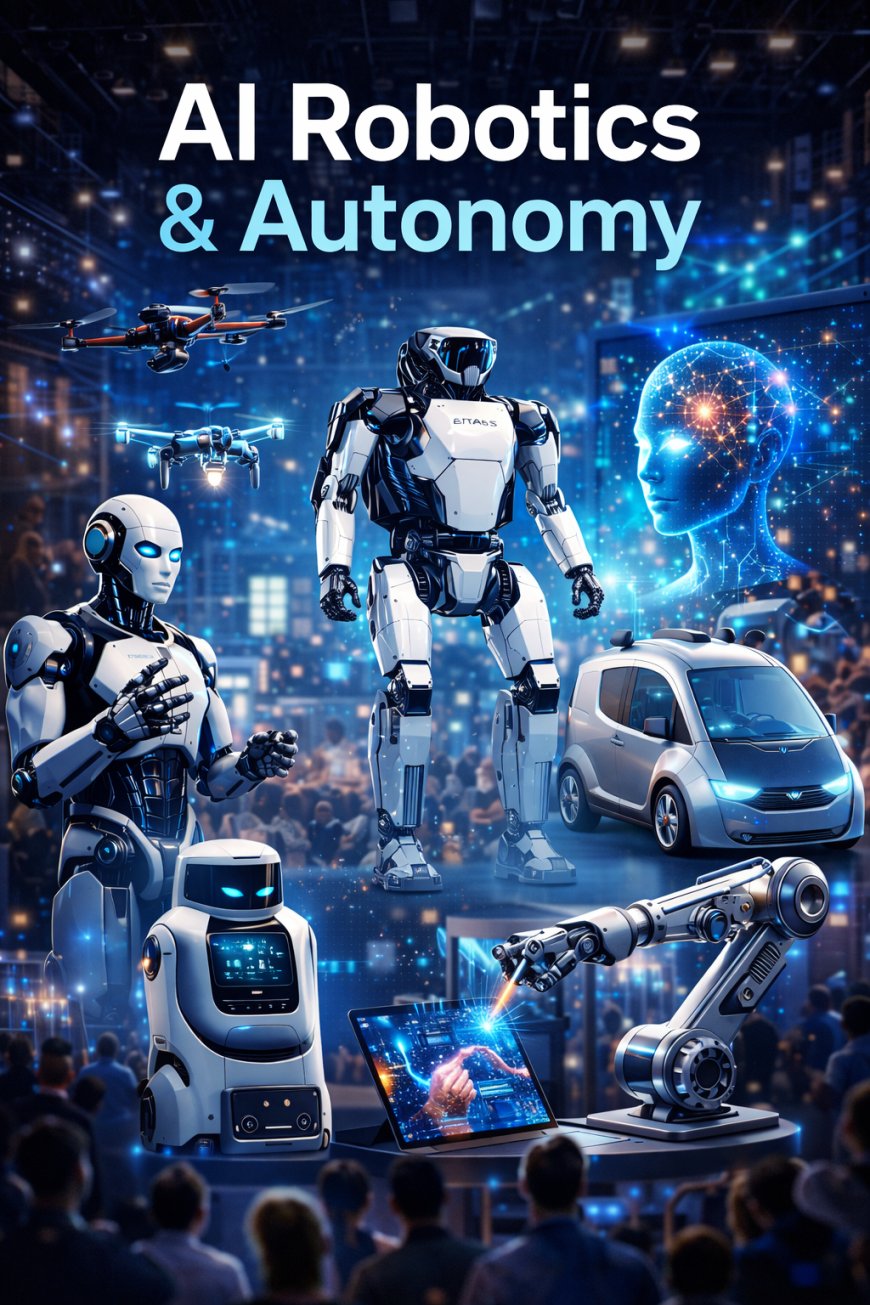
Artificial intelligence is stepping beyond screens and software, and into the physical world. Recent technology showcases are highlighting major breakthroughs in AI-powered robots, autonomous systems, and tangible AI, signaling a turning point in how humans interact with intelligent machines.
What was once confined to research labs is now being demonstrated as practical, working technology with real-world applications.
The Evolution of AI Robots
Modern AI robots are no longer limited to pre-programmed tasks. Advances in machine learning, computer vision, and real-time decision-making have enabled robots to understand their surroundings, adapt to changing environments, and interact safely with humans.
Robotic demonstrations now feature machines capable of walking, lifting, sorting, navigating complex spaces, and performing delicate operations. These abilities mark a shift toward robots that can operate independently in dynamic, unpredictable conditions.
Autonomy Redefines Machine Intelligence
Autonomous systems are emerging as one of the most transformative aspects of AI innovation. From self-navigating robots to intelligent drones and autonomous vehicles, machines are learning to make decisions without constant human input.
These systems rely on advanced sensors, AI-driven perception, and continuous learning to respond in real time. Autonomy improves efficiency, reduces errors, and opens new possibilities in industries such as logistics, manufacturing, agriculture, and public safety.
Tangible AI: Intelligence You Can Touch
Tangible AI refers to intelligent systems embedded directly into physical objects—machines that sense, think, and act in the real world. Unlike traditional AI software, tangible AI interacts with people through movement, sound, and physical presence.
Examples include collaborative robots working alongside humans, smart devices that adapt automatically to user behavior, and AI systems that respond to touch, motion, and environmental changes. This approach brings AI closer to natural human interaction.
Practical Applications Meet Futuristic Vision
What makes today’s AI robotics breakthroughs especially significant is the balance between practical deployment and futuristic innovation. Companies are showcasing robots designed for warehouses, hospitals, factories, and homes—demonstrating immediate value and scalability.
At the same time, experimental concepts hint at future possibilities, such as humanoid assistants, autonomous urban mobility systems, and AI-driven infrastructure maintenance. These demonstrations provide a glimpse into how intelligent machines may soon become part of everyday life.
Collaboration Between Humans and Machines
A key theme emerging from recent robotics showcases is collaboration rather than replacement. AI robots are being designed to assist humans, enhance productivity, and improve safety. Features like human-aware navigation, gesture recognition, and adaptive behavior allow robots to work smoothly alongside people.
This collaborative approach helps build trust and accelerates adoption across industries.
Shaping the Future of Intelligent Systems
The rapid progress in AI robots, autonomy, and tangible AI systems marks a defining moment for technology. As hardware, software, and AI models continue to converge, intelligent machines are becoming more capable, accessible, and reliable.
These breakthroughs are not just technical achievements—they represent a shift toward a future where AI exists as a physical, interactive presence, transforming how we work, live, and interact with the world.