













Apple’s Boldest iPhone Overhaul Yet: What to Expect from the Biggest Upgrade in History
Apple is preparing the largest-ever upgrade to the iPhone, featuring major design changes, advanced hardware improvements, and next-gen performance enhancements.

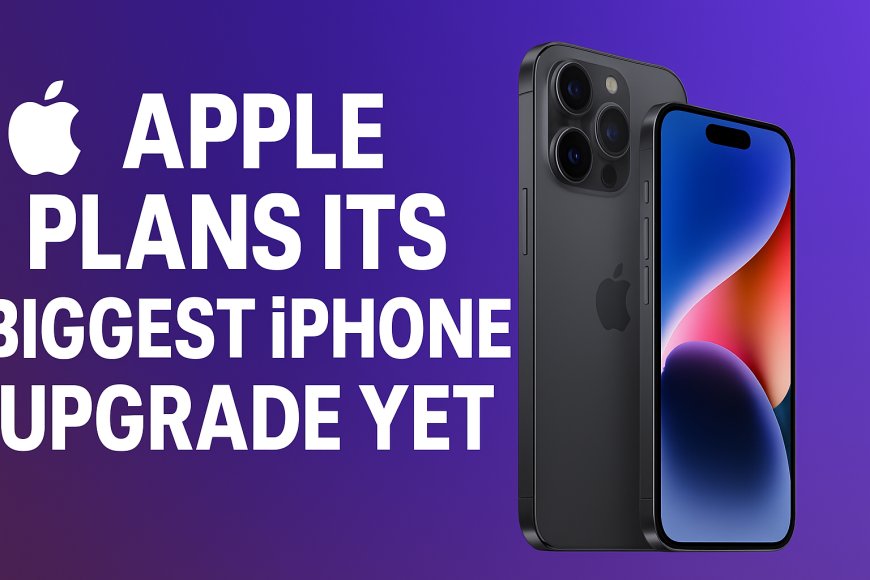
Apple is reportedly preparing the most significant upgrade in iPhone history — a sweeping redesign that could reshape how we think about its most iconic product line. While Apple naturally keeps its cards close, recent reports suggest that this next-gen iPhone could mark a turning point, blending ambitious hardware changes with a reimagined software philosophy.
What “Largest-Ever Upgrade” Means for Apple
The phrase “largest-ever upgrade” isn’t just marketing hyperbole; the indications are that Apple is planning fundamental changes — not just incremental tweaks. Rather than simple yearly refreshes in camera, processor, or screen, this could involve core architecture shifts, design reimagining, and possibly a refresh of Apple’s entire iPhone strategy.
Here’s what we know (and what might be coming):
Key Areas of Transformation
-
Under-the-Hood Architecture
-
Apple may transition to more advanced chip designs, possibly leveraging next-gen fabrication techniques. This could yield significantly better performance and energy efficiency.
-
There are hints of a move toward even tighter hardware-software integration, pushing the boundaries of Apple’s custom silicon advantage.
-
-
Design Overhaul
-
The physical look of the iPhone could change dramatically: think sleeker frames, new materials, or refined dimensions.
-
We might see a shift in display technology — possibly thinner bezels, new panel types, or improved refresh rates — making the user experience feel more fluid than ever.
-
-
Camera Innovation
-
Apple could be planning big leaps in camera hardware: better sensors, improved low-light performance, and more advanced computational photography.
-
There might also be new camera modes or features designed to leverage AI or ML, giving users creative power beyond what existing iPhones offer.
-
-
Battery and Charging
-
With improved power efficiency, Apple may increase battery life without drastically increasing battery size.
-
Charging technology could also be upgraded, whether through faster wired charging, more efficient wireless charging, or perhaps entirely new charging forms.
-
-
Software and Ecosystem Enhancements
-
iOS may get major new capabilities tailored to leverage the new hardware’s full potential.
-
Apple could strengthen cross-device integration (Mac, iPad, Watch) in new ways, making the iPhone more central in its ecosystem.
-
-
Sustainability and Materials
-
Given Apple’s environmental commitments, this upgrade might use more recycled and eco-friendly materials.
-
Apple may also improve its repairability standards or modular design to reduce electronic waste.
-
Why This Matters
-
For Consumers: If Apple pulls this off, it could mean a new era of iPhones — more powerful, more efficient, and more feature-rich than anything we've seen. For users running older models, it might be the perfect opportunity to upgrade.
-
For the Industry: Competitors will feel the pressure. A major architecture shift could raise the bar for performance, design, and integration across all smartphone makers.
-
For Developers: A big hardware overhaul means developers may need to rethink how they build apps, especially to take advantage of new capabilities in camera tech, processing power, or battery life.
-
For Emerging Markets (like India): Apple could use this upgrade to make iPhones more appealing by offering long-term value via hardware longevity and stronger resale value.
Risks and Challenges
-
Cost: A large-scale upgrade could涨 the price significantly, which might alienate price-sensitive customers.
-
Supply Chain Pressure: New designs, materials, and chips could strain Apple’s manufacturing chain, especially if the changes are radical.
-
Software Maturity: If new features are built around emerging hardware (like AI or next-gen sensors), Apple must ensure that iOS is stable and polished.
-
Customer Adoption: Users may hesitate to switch from older, still-capable iPhones if the upgrade is not perceived as “must-have.”
My Take
This could be a defining moment for Apple. Rather than just iterating on past successes, Apple appears to be taking a bold leap. If these reports are accurate, the next iPhone could blur the lines between smartphone, computing device, and even AI assistant hub.
For anyone thinking of upgrading, now might be a good time to wait and watch — especially if you’re interested in maximum value and future-proof performance.