
Google’s Vision of Space-Based Data Centres: A Bold New Era for Cloud & Compute
Google’s vision of space-based data centres promises cleaner energy, faster connectivity, and next-gen cloud computing. Explore how this breakthrough could reshape AI.
 vishalyadav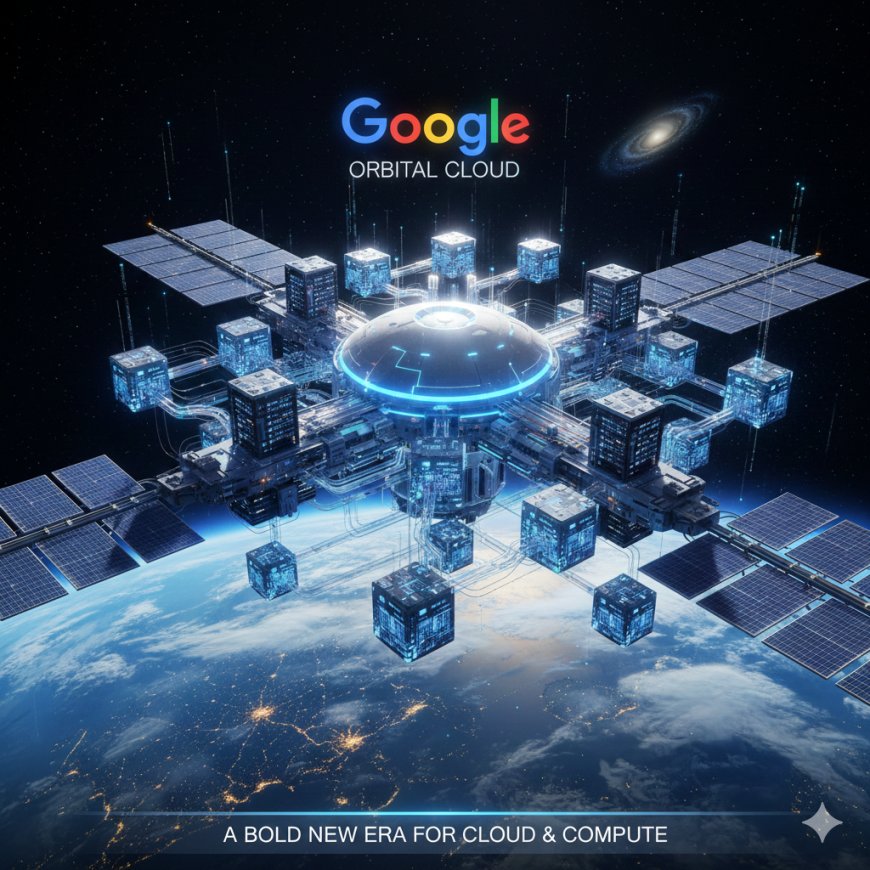
The future of cloud computing may soon extend far beyond Earth — literally. In a recent announcement, Google’s CEO revealed an ambitious idea that has captured global attention: data centres in space. While the concept sounds like something out of science fiction, it reflects a growing trend in the tech world to rethink how digital infrastructure can be powered, scaled, and made more sustainable.
This bold vision signals Google’s aim to innovate at a level that reshapes not just the cloud industry, but the foundation of global computing itself.
???? Why Space? The Logic Behind the Leap
Building data centres in space isn’t just an extravagant idea. It tackles some pressing challenges faced by the tech industry:
1. Unlimited Solar Energy
Space offers access to constant sunlight, free from Earth’s weather, atmospheric interference, and day-night cycles. This means continuous, clean, renewable power — a game-changer for energy-hungry data centres.
2. Cooling Advantages
Cooling is one of the biggest operational costs for data facilities on Earth. Space environments could potentially allow more efficient heat dissipation, drastically cutting energy consumption.
3. Massive Scaling Potential
As AI workloads explode, global data consumption rises, and computing demands hit historic highs, Earth-bound facilities simply can’t scale fast enough. Space, on the other hand, offers virtually infinite room to grow.
???? How Would Space Data Centres Work?
The concept involves placing modular, solar-powered computing units in orbit. These units would:
-
Run cloud workloads and AI models
-
Connect with Earth via high-speed laser or radio links
-
Operate autonomously with minimal human intervention
-
Leverage robotic maintenance systems
While many technical challenges remain — from launch costs to orbital safety — the rapid rise of private space companies makes the idea more feasible than ever.
???? Potential Benefits for the Tech Ecosystem
1. Greener Cloud Computing
Shifting compute workloads to space could drastically reduce the carbon footprint of data centres, helping companies meet sustainability goals and cut operational emissions.
2. Faster Global Connectivity
Low-latency data routing between satellites and Earth could speed up services, especially in remote or underserved regions.
3. Disaster Resilience
Space-based infrastructure is immune to natural disasters, power outages, and geopolitical conflicts that threaten terrestrial data centres.
4. Support for AI and Big Data Growth
As AI models grow more complex, they require astronomical amounts of compute power. Space could be the next frontier to support this explosive demand.
⚠ Challenges & Ethical Considerations
While the idea is groundbreaking, it brings new concerns:
-
High launch and maintenance costs
-
Space debris and orbital safety
-
Signal latency challenges
-
Regulatory and security issues
-
Ownership and jurisdiction in outer space
Solving these challenges will require collaboration across governments, tech companies, and space agencies.
???? A Glimpse Into the Future
Google’s hint at space-based data centres is not just an experimental idea — it reflects the direction in which the digital world is heading. As the boundaries between space technology and cloud computing blur, we may be entering an era where compute power truly becomes universal and limitless.
The next decade could see the first functional orbital cloud platforms — and with companies increasingly pushing technological boundaries, the sky is no longer the limit. Quite literally.