













US Bill Seeks Transparency on How AI is Changing Job Markets
The U.S. is introducing a new bill requiring companies to report how AI affects jobs, including job loss, job creation, and reskilling. A major shift in AI oversight.

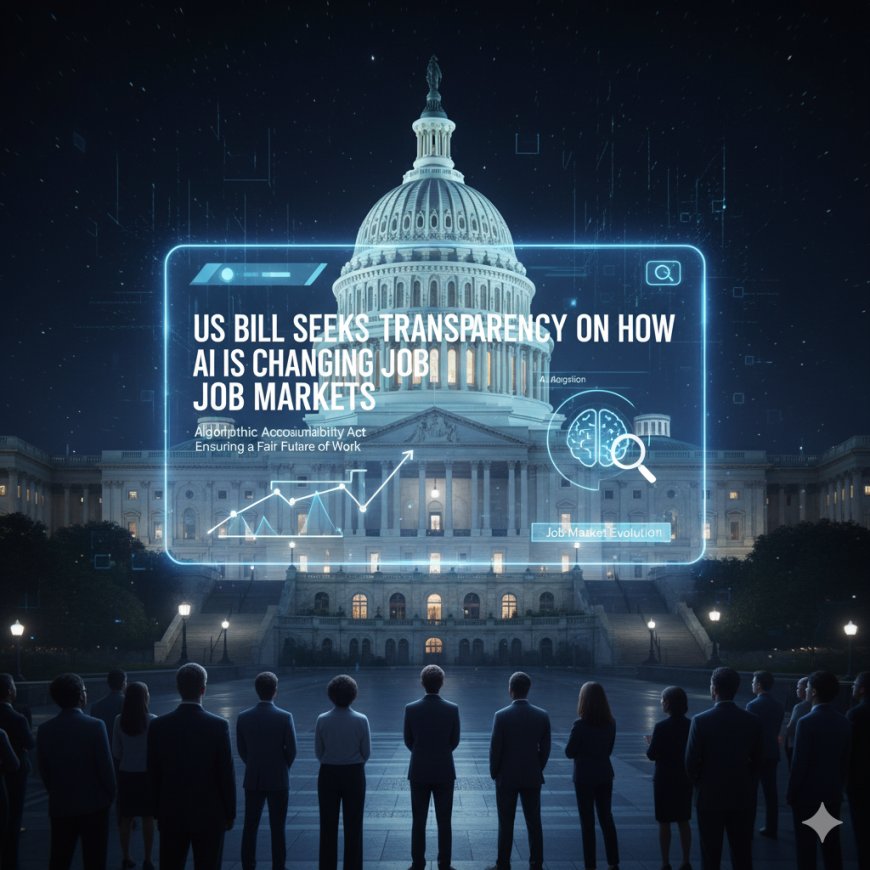
Artificial Intelligence has rapidly become the engine behind workforce optimization, faster decision making, automation, and cost-reduction inside companies. But while AI is transforming processes at incredible speed, it is also triggering questions about employment security and accountability. In response to growing concerns, a new bill has been pushed in the United States which aims to track how AI is influencing employment — both positive and negative.
This could become one of the most important turning points in the global AI regulatory framework.
What this bill proposes
The bill seeks to make it mandatory for companies and federal agencies to report quarterly data on:
-
Jobs replaced because of AI
-
New jobs created or roles transformed due to AI adoption
-
Employee reskilling programs conducted as a result of AI integration
This is not about stopping AI.
It is about identifying the real job impact — with numbers, evidence, and transparency.
This would be the first structured employment impact reporting framework specifically focused on AI adoption.
Why the U.S. is attempting this now
In 2025, AI adoption has accelerated beyond predictions. Enterprises across manufacturing, banking, defense, transportation, retail, logistics, and digital services are now heavily integrating generative AI, autonomous systems, and predictive AI.
This has two large consequences:
-
Massive cost efficiency → fewer repetitive roles
-
New kinds of roles emerging → AI trainers, AI auditors, prompt engineers, LLM integration specialists, data governance experts
Policymakers want to ensure that while companies gain AI benefits, the employment landscape doesn’t turn into silent displacement chaos.