









WHO Releases New Global Research Agenda for Child Health: A New Direction for the Future
WHO releases a new global research roadmap to strengthen child health, boost prevention, close inequality gaps, and address climate, nutrition & digital health risks.

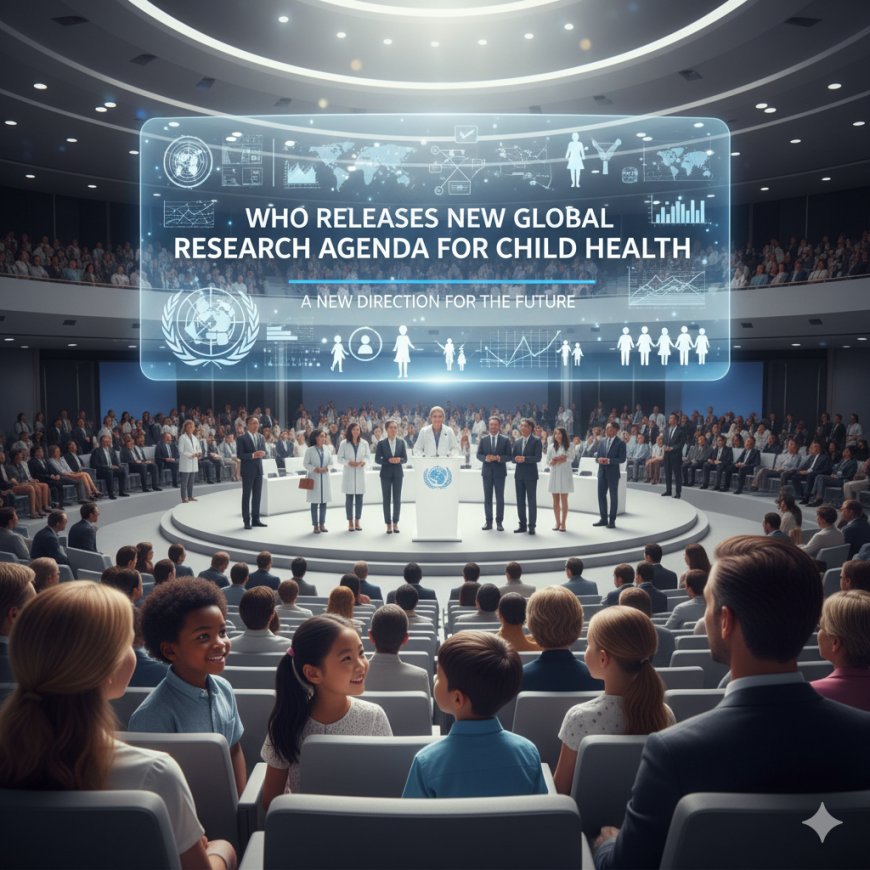
The World Health Organization (WHO) has rolled out a fresh global research agenda focused on child health, setting new priority pathways to protect children worldwide. With rising disease risks, lifestyle shifts, climate stress, nutritional imbalances and digital exposure — children today face a very different health environment than a decade ago. WHO’s new strategy aims to accelerate scientific research, evidence-based solutions, and innovation to improve survival, growth and development outcomes for every child globally.
Why a New Child Health Research Agenda Was Needed
Over the last few years, emerging threats like infectious variants, antibiotic resistance, climate-linked health disorders, air pollution, screen addiction, obesity among young children and declining vaccination confidence have created new vulnerabilities. WHO believes that the next decade must be driven by targeted research that directly connects science to the daily lives of children.
Key Priority Areas WHO Will Focus On
-
stronger prevention models for infectious childhood diseases
-
solutions to improve early brain development & mental wellbeing
-
closing the gap in nutrition, micronutrient access and safe food
-
stronger healthcare delivery in low & middle income countries
-
research on climate impact, pollution exposure and child immunity
-
improving digital health literacy and reducing harmful online influences
-
next-gen vaccines & medical innovations designed for child populations
A Global Agenda That Includes All Regions
One major purpose behind this initiative is to reduce the huge inequality gap between developed and developing countries. WHO has stated clearly that research must not only be high-level — it must be equitable, accessible and usable by health systems in Africa, South Asia, Latin America and other low resource regions.
India’s Role in This Transformation
India has one of the world’s largest child populations, making it a central player in this research shift. Pediatric healthcare programs, immunization coverage expansion, digital health mission, and AI health analytics can offer valuable models for researchers globally. Strong adoption of evidence-based policy can position India as a leading contributor in this new WHO child health era.
Conclusion
The new research agenda by WHO sends a strong reminder: the health of tomorrow depends on what we invest in today. The world must protect children not just in hospitals — but through environment, nutrition, education, clean air, and an ethical digital ecosystem. The research roadmap brings hope for a healthier generation and more resilient global health future.