













Fashion & Sustainability Spotlight at COP30: A Turning Point For The Industry
COP30 places strong focus on sustainable fashion. Global brands face new pressure to reduce waste, emissions, deforestation and transform into climate-positive industry.

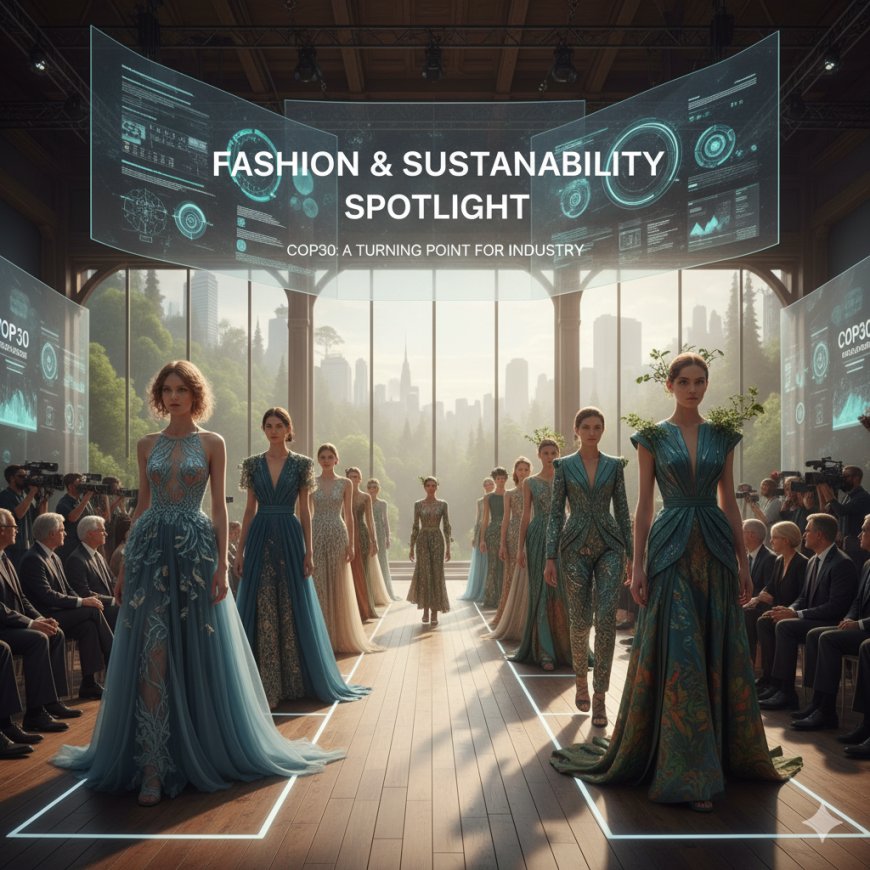
COP30 is not only shaping global conversations about climate action — it is also forcing the international fashion industry to confront its environmental responsibility. As world leaders, climate experts and environmental organizations gather, the spotlight has shifted towards how fashion brands, supply chains and global manufacturing are contributing to planetary pressure.
Fashion is one of the world’s largest industries, but it is also one of the most resource-intensive sectors. From water usage, dye chemical discharge, textile waste, microplastic pollution to deforestation and fast-fashion landfills — the environmental footprint is massive and alarming.
Fashion Can’t Ignore Sustainability Anymore
COP30 conversations clearly emphasize that the fashion industry must go beyond symbolic green campaigns and begin implementing real, measurable climate action. Sustainability today is not an optional marketing trend — it is emerging as a core expectation from regulators, consumers and future climate policies.
Major global brands are now being asked to disclose:
-
Transparent sourcing of raw material
-
Impact of cotton, leather, and synthetic fiber production
-
Deforestation linked to textile supply chains
-
Worker ethics and fair trade labor
-
Carbon emissions at every stage of manufacturing
The Amazon Factor at COP30
Brazil hosting COP30 created even stronger urgency on Indigenous rights, forest protection and land preservation. The Amazon and Cerrado regions are central to the global climate system — and for many years, fashion manufacturing sourcing indirectly contributed to deforestation and biodiversity loss.
This year’s COP signals that fashion must transform into a climate-positive model, not just climate neutral.
India + Fashion + Climate Responsibility
India also stands at a very important position in global textile exports. From Surat to Ludhiana to Tirupur — Indian textile manufacturing feeds major international brands. The pressure on local industries to adapt sustainable fabrics, responsible production, and waste-free processing will grow in 2025 and beyond.
Green innovation in India — like fabric recycling, eco-friendly dyes, organic cotton, industrial textile 3R programs — can become India’s competitive advantage going forward.
Conclusion
The biggest message from COP30 is crystal clear — the world will no longer accept fashion that harms the planet while claiming style innovation. Sustainability is officially entering the center stage of the fashion industry’s future direction.
COP30 may become a climate turning point for fashion, pushing the sector to evolve into an ethical, transparent and regenerative industry.