











The AI Cold War: U.S. vs China and the Future of Global Power
Explore how the U.S. and China’s rivalry in artificial intelligence is reshaping global power, ethics, and innovation — the new era of the AI Cold War.

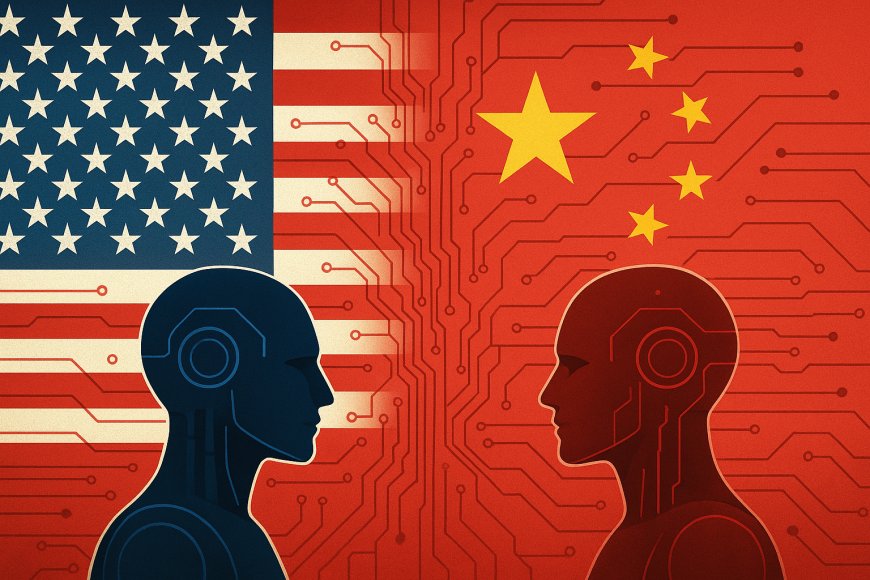
The world is witnessing a new kind of superpower rivalry — one not fought with missiles or armies, but with algorithms and data. The escalating competition between the United States and China in the field of artificial intelligence (AI)** is being called the “AI Cold War.” Unlike the 20th-century standoff between Washington and Moscow, this battle is defined by technological dominance, digital infrastructure, and control over the world’s most powerful resource: information.
???? The Roots of the Rivalry
The AI race began as both nations realized that AI would shape the next era of economic and military supremacy. In 2017, China announced its plan to become the world leader in AI by 2030, investing billions in research, smart cities, surveillance systems, and semiconductor development.
Meanwhile, the United States — home to tech giants like Google, OpenAI, Microsoft, and NVIDIA — has leveraged innovation, cloud infrastructure, and startup culture to maintain its lead in core AI research and generative models.
However, what was once healthy competition has evolved into a strategic rivalry with deep geopolitical implications.
⚙️ Key Battlefronts in the AI War
1. Semiconductors and Hardware
Chips are the lifeblood of AI. The U.S. holds an advantage with companies like NVIDIA, Intel, and AMD, but China is rapidly developing domestic alternatives through firms such as SMIC and Huawei. U.S. export bans on advanced AI chips have pushed China to accelerate innovation in homegrown semiconductor production.
2. Data Dominance
China’s vast population gives it access to enormous datasets, which fuel machine learning systems. In contrast, the U.S. benefits from open innovation, global partnerships, and diverse data ecosystems. The question is not just who has more data, but who can use it more efficiently and ethically.
3. Military and Surveillance Applications
Both nations see AI as a game-changer for defense. The U.S. Defense Advanced Research Projects Agency (DARPA) and China’s People’s Liberation Army (PLA) are developing autonomous weapons, drones, and cyber warfare tools that rely heavily on AI. This raises global concerns about the militarization of artificial intelligence.
4. Global Influence and Digital Diplomacy
China’s Belt and Road Initiative now includes Digital Silk Road projects — spreading AI-enabled infrastructure across Asia, Africa, and Europe. Meanwhile, the U.S. strengthens alliances with democracies like Japan, India, and South Korea through initiatives like the Quad Tech Network, aiming to counter China’s growing tech influence.
???? The Ethical Divide
One of the most defining aspects of this rivalry is the difference in AI ethics.
-
The U.S. emphasizes privacy, transparency, and human rights (though critics argue enforcement is inconsistent).
-
China, on the other hand, prioritizes state control and social stability, deploying AI in surveillance and social credit systems.
This clash of values represents not just a technological divide — but a philosophical one about how societies should be governed in the digital era.
???? What This Means for the World
The AI Cold War affects everyone — from small businesses to global consumers. As both nations race ahead, countries in Europe, India, and Southeast Asia are carving their own AI paths, balancing between collaboration and independence.
The outcome of this competition will shape the future of jobs, cybersecurity, digital rights, and even democracy itself.
???? The Road Ahead
The AI Cold War is not merely about dominance — it’s about who defines the future of intelligence itself. While competition can fuel innovation, it also risks deepening divides, cyber conflicts, and regulatory chaos.
The world stands at a critical juncture where collaboration on AI safety, ethics, and governance could prevent this rivalry from escalating into a full-blown digital war.
???? Conclusion
Just as the original Cold War shaped the second half of the 20th century, the AI Cold War will shape the 21st. Whether it leads to cooperation or confrontation depends on how wisely the world’s two tech superpowers balance ambition with responsibility.
In the end, the true victory won’t belong to the nation that builds the smartest machines — but to the one that uses them most wisely for humanity’s progress.